Summary Of My Experience

This project was very new to me. I have never content created in any other platforms, and to make a WordPress blog was a great experience. It opened up ideas of what I would want to do in my life and gave me a challenge to take up upon.

COVID-19’s Effect

I really wished things could have been different, but with the pandemic that is going on right now, I was not able to post about Laos New Year. Laos New Years is held in the month of April. Things happen all the time, and with the help of my mom and older family members, I was able to get some posts off.

Improvements

Looking at my site compared to others, I need many more improvements. I should have added a little more posts, and also add better navigation within my site. To better promote my content, I could have ask my mom or other family members to share it to their friends and co-workers. But they probably wouldn’t have looked at it anyways.

Best Experience

My best experience with this project is learning more about my culture through my mother and older family members. I have always lived without the thought of learning more about my own culture. Before I go looking things up on the internet (for all my blog posts), I always go to my mom or my family members first. I have learned many things from them; such as learning new terms and learning why we do certain things in our culture.

Benefit For The Future

This experience could benefit me in the future by opening many doors for me. Since I never content created, I will try new things; such as, making a YouTube video and vlogging a trip to a different country. I can implement these tools professionally in the future by adapting to different measures, and use creativity to solve solutions or create something.

Statistics
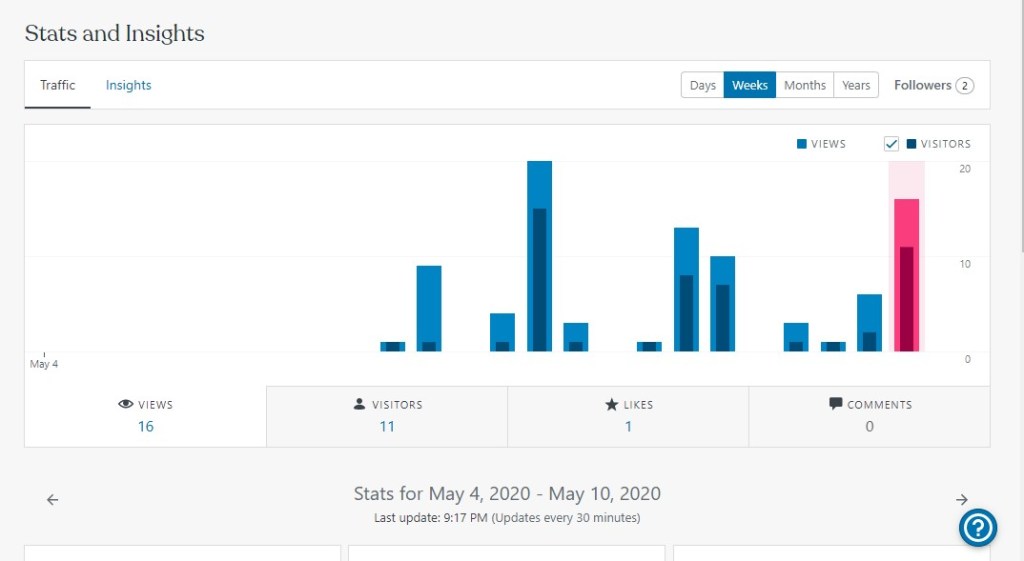
Statistics for views separated in weeks

My most popular week was the week of February 24, 2020, to March 1, 2020. I got 20 views that week and 15 visitors. Not much, but aye, it’s something. My most popular post of the semester was my “What We Eat With Everything” post. I believed it was the most popular because my some of my friends and family members actually read it, and one of my friends retweeted my promotion. In all of the sites data, nothing was really surprising.
The Koak and Sakk

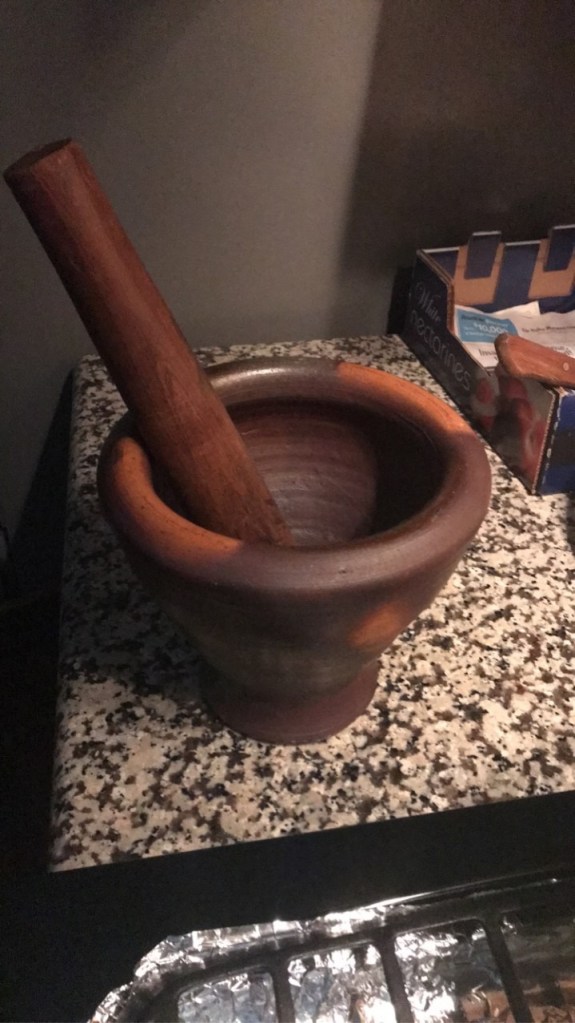
The Koak and Sakk means Mortar and Pestle. It is an essential kitchen tool for a Laotian. One can not be without the other, which makes this kitchen tool unique.

What is it?

The Koak and Sakk is probably one of the most essential kitchen tool for any Laotian. This kitchen tool works like a grinder, blender, and food processor. This is used for smashing ingredients and vegetables; to bring out flavors and natural oil. This kitchen tool helps start many known Lao dishes and gives it the flavors the dish needs.

The Koak and Sakk

What You Make From It?

The Koak and Sakk is a very versatile kitchen tool that can produce many things. But the two main things that come out of this kitchen tool is jaoew (jail, but without the L), which is dipping sauce; and thum mar hoong (thumb-mah-hoong), which is a spicy sauce for Laos papaya salad.

Other Usage

This tool can also be used to smash any type of protein, and also be used as a mixer. From experience, smashing protein takes time. It can range from 30 minutes to 2 hours, depending on the type of meat it is and what you are cooking. There are quicker ways to do these things, but with this tool, you are using your own strength so you are in control. You will know when the ingredient, sauce, or whatever you are doing, is ready for whatever you are planning to make.

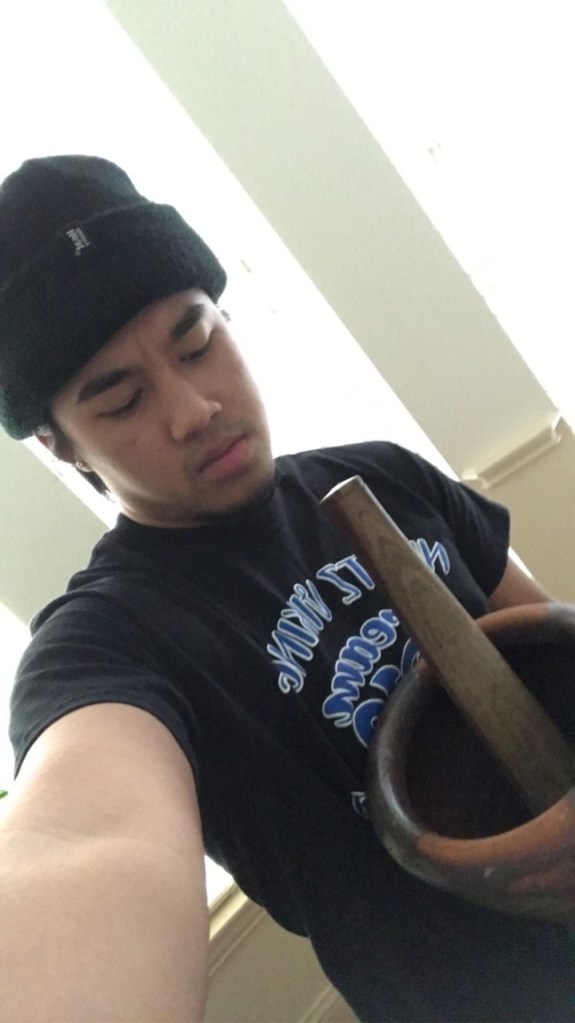
I know there isn’t anything in there

The Koak and Sakk Mixin’ it Up

One of my favorite dish coming from the Koak and Sakk is the Laos papaya salad. You grind out the papaya then you make the thum mar hoong with the Koak and Sakk and mix it together.

Papaya Salad

After making the papaya salad, you can add whatever you want with it; such as more vegetables and seafood. Sticky rice with papaya salad good as fudge. If you guys ever get a chance to try it, just be ready for the spiciness.

Meditation Station

In the Laos culture, meditation is one of the things you can’t just miss. There are different types of meditation in Laos culture; in this post I will talk about what my family does.

Where It Take Place

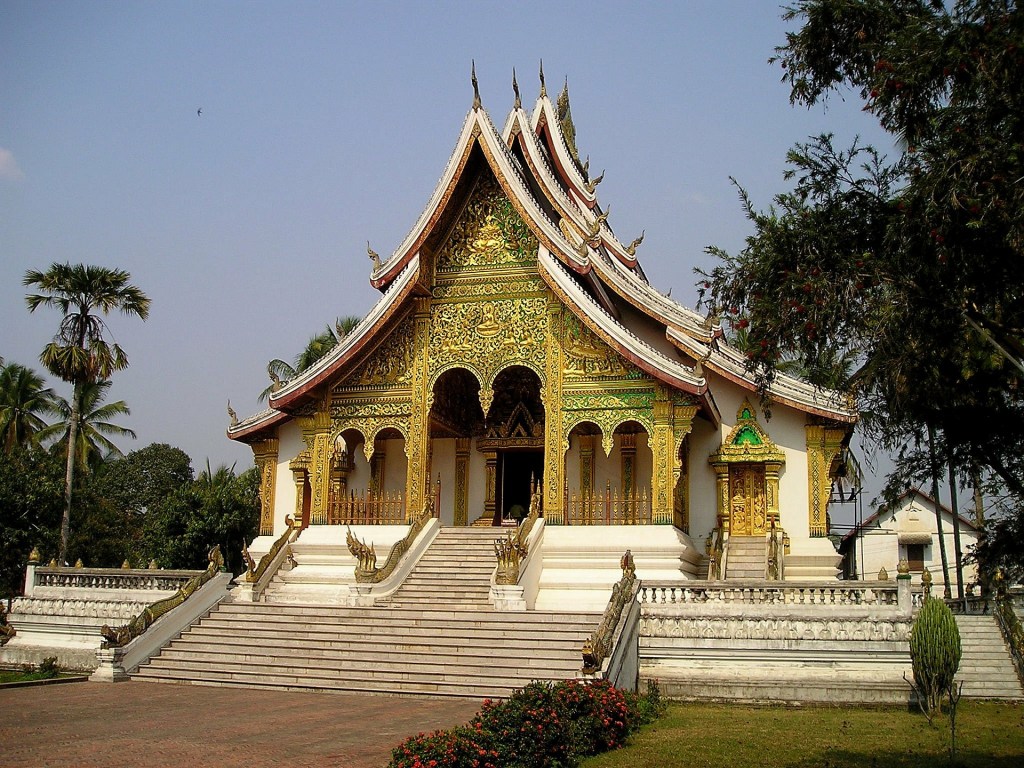
Meditation can take place at a Buddhist temple, or simply just your home. Going to a Buddhist temple to meditate is just like going to church on Sundays. These meditation sessions at a temple can last up to 2 hours. To me it is really boring, but on the bright side we get to eat; and my family usually goes to meditate on special occasions or once a month.

Buddhist Temple

Home Style

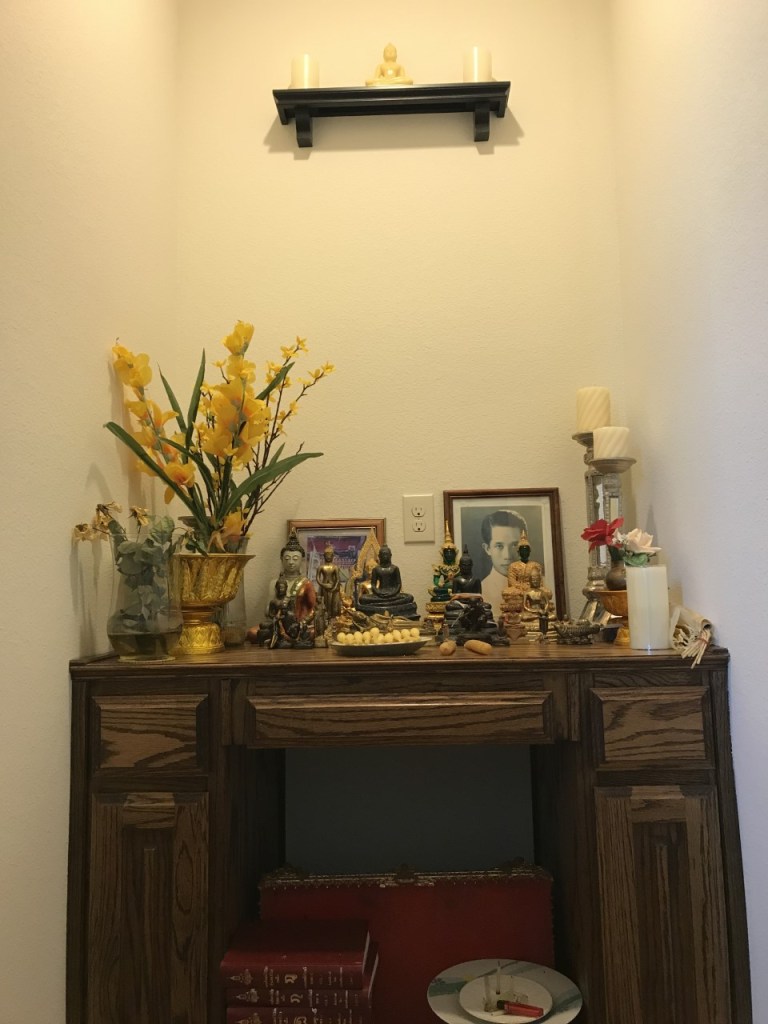
The meditation spot in my family’s house

Another place you can meditate at is at your home. In this picture, there are different Buddha statues, candles, pictures. and flowers that are placed all around. That is really all you need to set it up. After my parents set this up, they blessed it so everybody in the house can use this area.

Difference Between Home and Temple

Meditation at home and at a temple is very different. When you do it at home, it is not as long as a session at a temple. Usually when my grandpa does meditation, it is between 15 to 30 minutes, with 45 minutes being the maximum. At the temple the sessions are longer and there are other things we do; such as giving back to the monks, give pray to our ones, and eat after the session.

Our Routine

As mentioned before, my family usually goes to a meditation session on special occasions or once a month. We usually do not meditate at home, but we do our short prayers every night. We do not do this all as a family, but separately. The steps is to sit down (with your legs to the side, or on your knees), put your hands together like you are praying, and bow down 3 times (as you go down, place your palms on the ground). During this prayer, you can say anything you want and you are done. The only person in our family who would meditate everyday was my grandpa because he was very religious.

3 Things I Would Like To Do In Laos

As you guys already know, I am a first generation American and I have not had the opportunity to visit the country my family came from. Landlocked and being a small country, there are still many things you can do and places you can go, and I want to gain knowledge throughout these first hand experiences.

1. Visit Vientiane, Laos

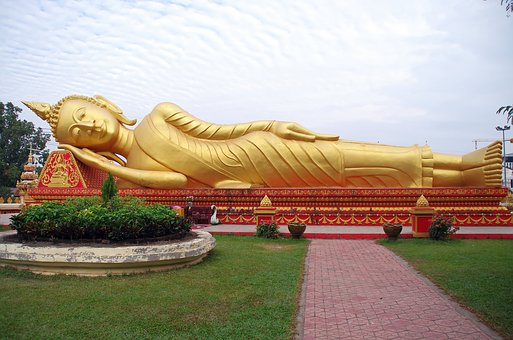
Sleeping Buddha at Vientiane

Vientiane is one of the places that I want to visit because it is the capital of Laos. What better way to learn about your heritage when you are at the capital of the country. Vientiane has many temples (or as Laotians like to call “Wats”), and temples are very special architectures, so experiencing a “Wat” session in a temple at Vientiane will be very cool.

2. Travel From Town To to Town

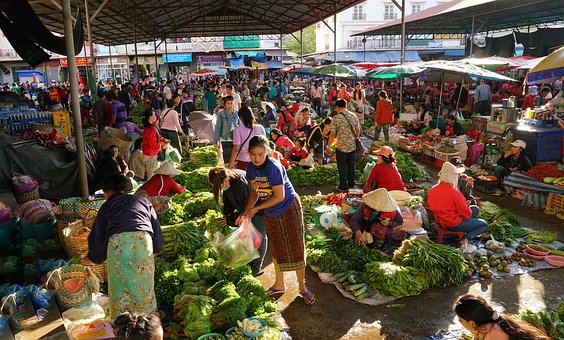
To enhance my knowledge about the traditions and culture in Laos through first hand experience, I want to travel to different villages, towns and cities. Travelling from town to town will open new doors to my culture that I never knew about. Meeting different people, looking at different landmarks, and eating new dishes of food is something that I will look forward to. For instances I would like to go to Luang Prabang( A big city in Laos that is located in the North region), and travel all the way to the south to visit Khmu villages ( where my mother is from).

Food market in Southern Laos

3. Hiking and Exploring Laos’ Geography

Laos is a small country, but has great geography and sites. From what my mother has told me, Laos has many waterfalls, forests, and amazing limestone mountains throughout its region. I want to go mountain and forest hiking to explore Laos’ nature and have the feeling to just be at a beautiful spot to just appreciate it. Seeing different mountain formations and caves will be fun experience when you are hiking. Hopefully I can learn something new about Laos and its history while hiking and exploring.

A waterfall at Luang Prabang, Laos

The Sou Khuan

The Sou Khuan is an important ceremony in Lao culture. “Sou Khuan” means calling of the soul, and can also be known as the Baci ceremony.

Hit The Khuan

The Sou Khuan ceremony is basically a good luck ceremony. The ceremony can be held for an individual, a couple, or a group. The ceremony consists of tying of the wrists with white strings for good luck.

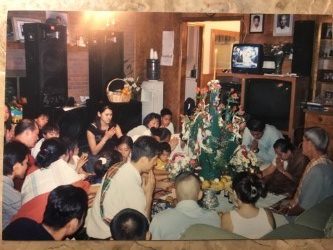
Sou Khuan for my parents for 3 months after birth of my younger brother in 2003

The ceremony is held for different events that are happening in people’s lives. These events can range from graduation, weddings, funerals, New Years, and even birthdays. In the ceremony there are certain objects that must be used in order to start the ceremony. The main object that you must need is the Pha Khuan. The Pha Khuan is the green object that everybody is around. It connects everybody’s blessings, prayers, and souls to the people that the ceremony is intended for. This is where the white strings does its work. In this case, my parents are receiving blessings, so while the prayers are going on, everybody is putting their hand on someone else to stay connected to the people that are touching my parents. So basically it is like a spider-web.

Why It Is So Unique

This ceremony is so unique in its own ways because it can be held on any day and time of the year, and can also have different ranges in sizes. Ceremonies can range from ten to hundreds of people depending on the occasion and event. What is also so unique about this ceremony is that nobody else does it, but Lao people.

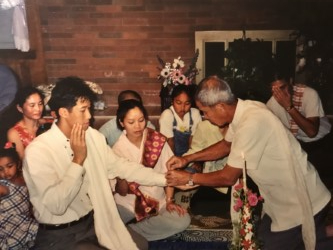
My grandpa tying my dad’s hand with white string

Compared to the other picture, this ceremony is a lot smaller. The Pha Khuan is a lot smaller (The green thing), and this ceremony is held for good luck for my parents’ future.

Culture Blog Ballin’

As I was surfing through Google and WordPress, I found a blog that was similar to mine, but was way better. The blog is My Persian Corner, which was made by author and teacher, Pontia.

Eye Catching Content

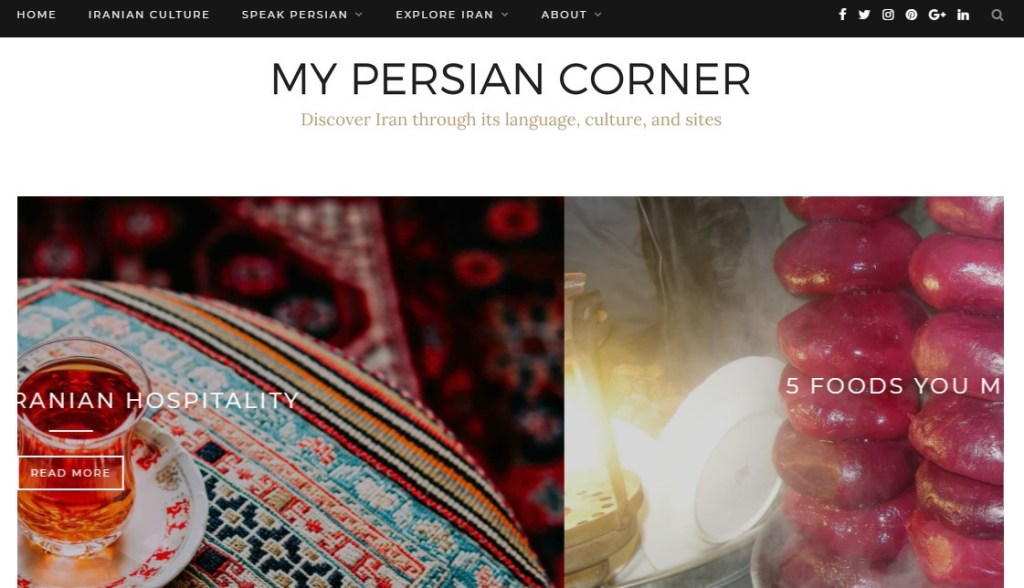
Pontia’s blog is about discovering “Iran through its language, culture, and sites”. Her blog is very organized and very easy to navigate the different topics around her website. What is also very cool about her blog is that there are many different lists she makes that ranges from “5 Foods You Must In Iran In The Winter” to “10 Persian Idioms And Phrases Related To The Eye”. These lists helps with getting her audience’s attention and even other people’s attention (It got mine). What I like most about what she covers is that she travels to different sites around Iran to learn more about where her family is from and her culture. That experience seems really fun and adventuring.

Home Page of “My Persian Corner”

Traveling Is The Move

I share similar intentions with Pontia about her idea of traveling to where her family is from, which is why I look up to her blog. To enhance her knowledge of her own culture, she travels to family members house, landmarks, and different villages. I also want to travel to where my family is from so I can learn more about where my parents came from too, and also learn more about traditions. I believe traveling will be a great attribute to my type of blog, and I hopefully I can go to Laos soon.

Something Unique

What is uniquely different about her blog from mine is that her blog is also a diary. She writes about her experiences when she travels to different places. She is an inspiration to my blog because what she does in her blog is something that I can pick up on.

What We Eat With Everything

What is really important in our culture food wise is Khao Niew, also known as sticky rice. Sticky rice is something that has to be in Lao culture because we basically eat everything with it.

Khao Niew Magic

The rice steamer and pot

The process of making sticky rice is very simple. There are different materials you need, such as the pot and the basket that steams the rice. The first thing you need to do is soak the rice for at least 20-30 minutes. The next thing you do is fill up the pot with at least 4 inches of water so it can steam the rice when it boils. After the rice is soaked, you want to poor the rice in the steam basket and rinse the rice at the same time. Once you are done with that, let the extra bit of water flow out of the steam basket, then place it on the pot. Now you just put it on the stove and let it cook for 30 minutes.

The Flip

During the process of the rice steaming, you have to flip the rice in the basket so the top of the rice can also be steamed once it is flipped to the bottom of the basket. After 15 minutes is when you want to do this step, and after another 15 minutes you can take out the rice.

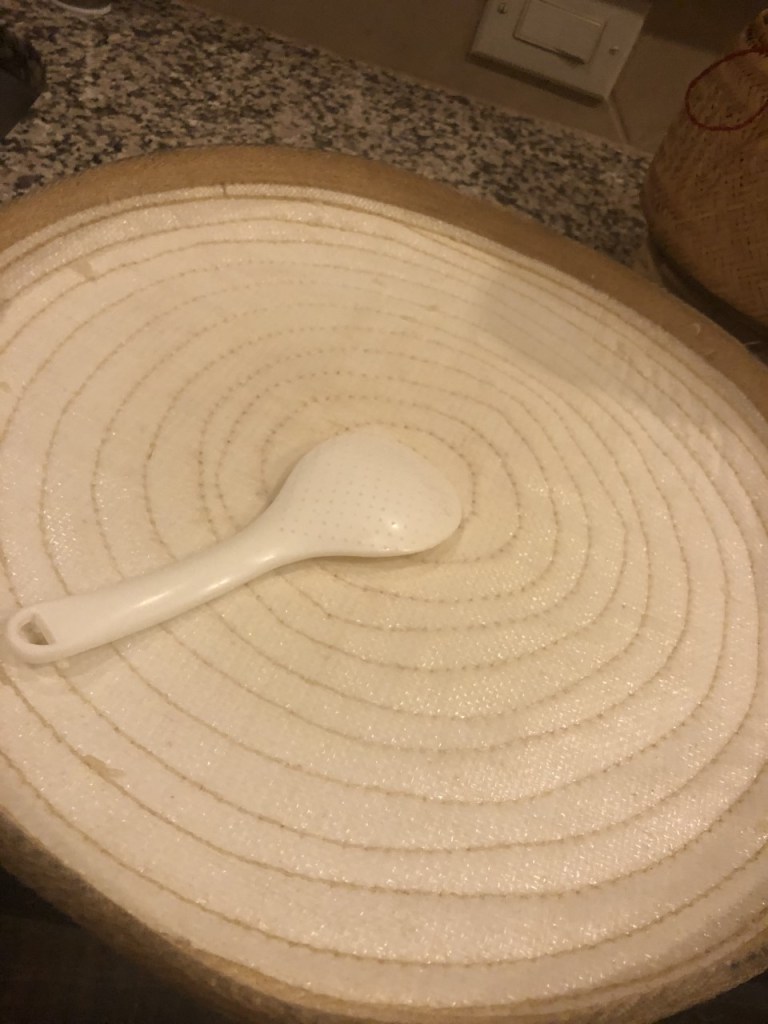
Flat bamboo straw tray

Once the rice is done cooking, you want to place the rice on the flat bamboo straw tray and air out the steam that is trapped in the rice. To do this, simply move the rice around with the white spoon that is on the picture.

Khao Niew in the Aip Khao

The Aip Khao

The “Aip Khao” is the rice basket. Once you are done clearing the steam from the rice, you put the rice in the basket and can now eat it with whatever you want with it.

Getting to Know Nathan X.

Hello guys, my name is Nathan Xayprasith and I am a freshman majoring in Digital Media Innovation. My previous major was biology, but I changed it because Digital Media caught my interest. In this blog, I want to share my heritage with other people and also learn more about my culture in the process. With this blog, I believe that I am able to achieve both of these expectations with a little help and promotion. What I hope to gain and explore from this blog is skills I can develop, and also to learn new things. I want to share my culture to other people, and also want to learn new things about my culture, so my target audience is anybody. From my family members, to my friends, and to people I do not know, hopefully my blog will be able to target anyone.

Heritage Flow

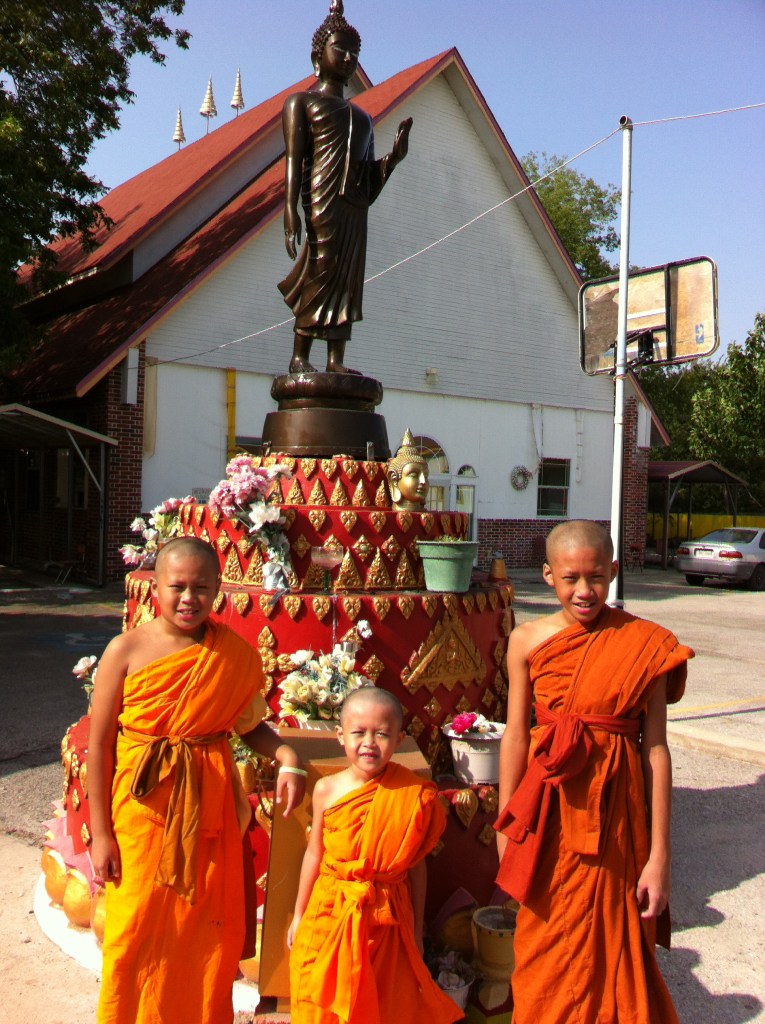
This picture was taken in 2013 during my granddad’s funeral

I am Laotian, and I grew up into Buddhism so it’s a part of my life. In this picture, it is my two younger brothers and I during my granddad’s funeral. We are dressed as Buddha monks to honor the death in our family. When a someone close dies in our family, the male members shave their heads/eyebrows, and do a mediation that invites us to become monks for a 12-hour period. I am the one on the right side and this was during my sixth-grade year. During the time, I really didn’t understand what me and my brothers were really doing because this was something new to us. Becoming a monk for my granddad was a new experience. This event opened my mind up for learning more things about my culture. In this blog, I will share dishes, customs, traditions, and even new things that I will learn about my culture.

Learning more about my culture

For me to learn more about my heritage, I am going to be doing interviews, traveling to different events, such as Laos New Year celebration in the DFW area, and helping my mom cook to see the ingredients for different dishes.

Design a site like this with WordPress.com
Get started